Dennis Steel - A Visit To Cowes Week Regatta
13th February 2026
In: News, Members' Articles
Isle of Wight Cowes Regatta - Dennis Steel
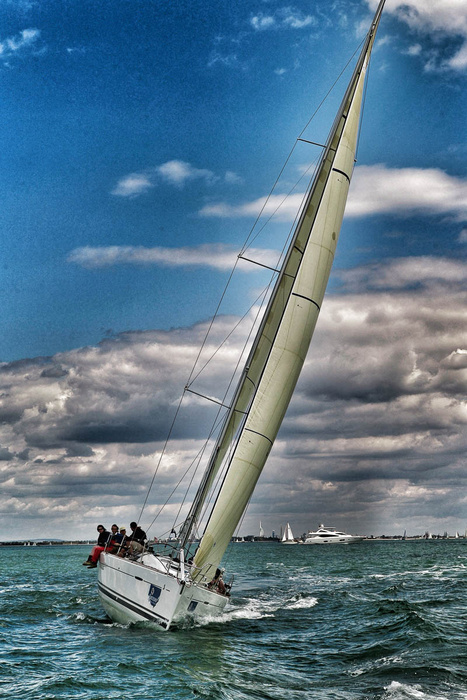
We have been to Cowes Week twice. The first time was in 2010, and the attached photographs were taken then. I used my M8 with a 24mm f/2.8 lens.
We travelled from North Yorkshire to the Crown Hotel in Lyndhurst. On the day we set off for the Isle of Wight, we left Lyndhurst for Lymington to catch the ferry to Yarmouth as foot passengers. On reaching Yarmouth, we used the local buses to travel to Cowes.
At Cowes, we joined a Jenny boat to reach the East Buoy in the Solent, around which the yachts must turn. The Jenny boat backed onto the buoy, leaving approximately 100 metres of space; this gave the yachts plenty of room to make their turn. Standing at the back of the boat, we had an excellent view of the yachts in full sail as they rounded the buoy. It was clear that the good crews executed a faultless turn; the poor crews made such a shambles that I thought their yachts were going to capsize.
Standing at the back of the boat, with the engine running and the skipper continuously adjusting position to compensate for the Solent’s tidal flow, made for an unstable platform from which to take photographs. I increased the camera speed (probably to 1/250 second) to overcome the boat’s rocking and rolling.
Next time we go to the Cowes Regatta I will take the SL3 with a 35mm f/2 lens, with both in-body and lens stabilization.
It’s easy to forget how manageable a 10MB file is on the computer compared with my M11’s 60MB files. That said, I would not go back to smaller files by choice.
History
Cowes Week is one of the UK’s longest-running and most successful sporting events. It has been held in early August every year since 1826, except during the two world wars and the COVID-19 pandemic in 2020.
Traditionally, Cowes Week takes place after Glorious Goodwood and before the Glorious Twelfth (the first day of the grouse-shooting season). Occasionally the dates are changed to ensure optimum racing, taking account of the tides or, as in 2012, to avoid a clash with the Olympic Games. Over the years the event has attracted British and foreign royalty and many famous faces.
The first race was for a Gold Cup valued at £100, held in 1826 for just seven yachts under the flag of the Royal Yacht Club (which later became the Royal Yacht Squadron in 1833). The early 1900s saw the Cowes Regatta continue in strength, with the graceful 23-, 19- and 15-metre boats racing in all their glory, followed by J-class boats in the 1930s.
Cowes Week Today
The regatta has evolved enormously since 1826. Now over 500 boats in up to forty different handicap, one-design, and multihull classes race every day for seven days. It is this mixture of classic and ultra-modern designs that gives the regatta its uniqueness.
Around 5,000 competitors now participate, ranging from Olympic and world-class yachtsmen to weekend sailors. The spectacle of the racing, together with the vibrant festival atmosphere, attracts over 60,000 visitors to Cowes. The atmosphere at Cowes Week is like no other; we will definitely go again.
2026 Cowes Regatta
Cowes Week 2026 (1st –7th August) will celebrate its bicentenary. The world-famous Red Arrows will perform, and the closing-night fireworks over the Solent will light up the skies for the Regatta’s 200th anniversary.
Around 800 boats and 8,500 competitors are expected to take part.
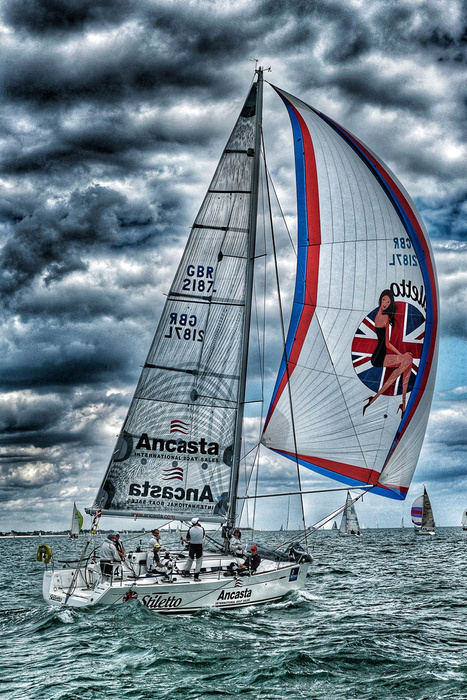
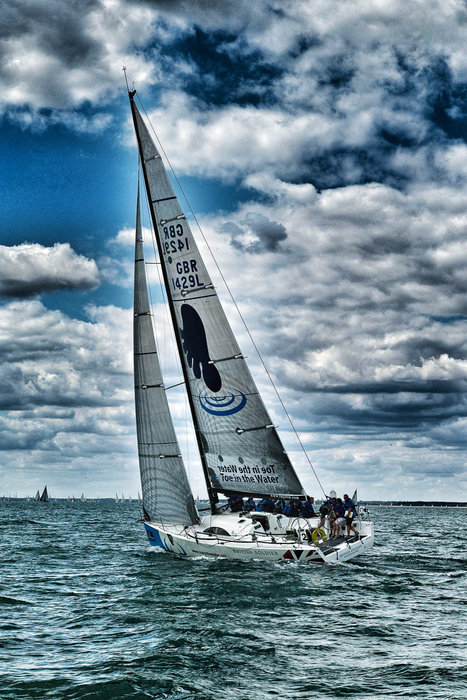
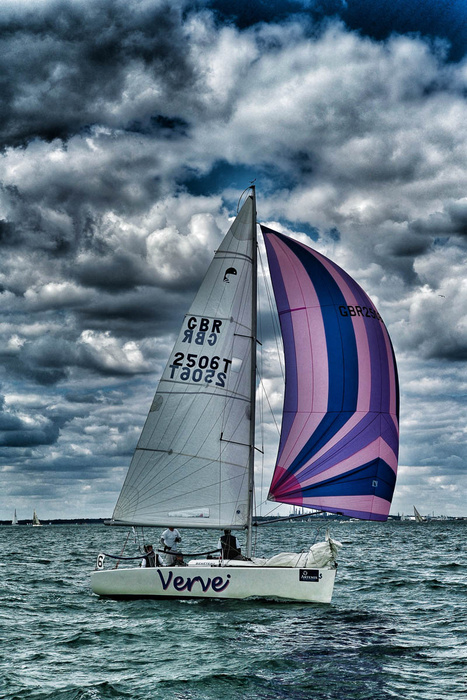
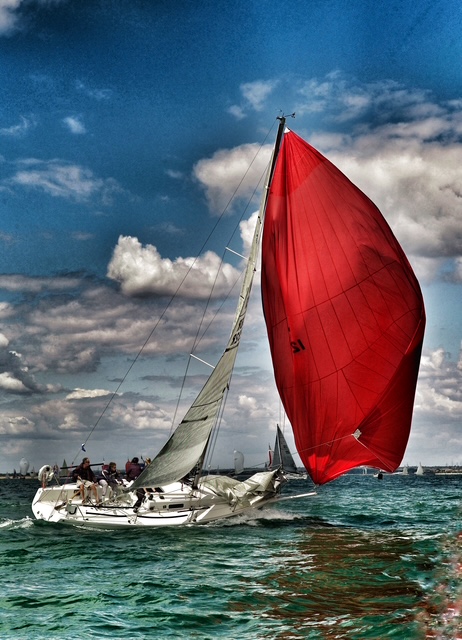
We have been to Cowes Week twice. The first time was in 2010, and the attached photographs were taken then. I used my M8 with a 24mm f/2.8 lens.
We travelled from North Yorkshire to the Crown Hotel in Lyndhurst. On the day we set off for the Isle of Wight, we left Lyndhurst for Lymington to catch the ferry to Yarmouth as foot passengers. On reaching Yarmouth, we used the local buses to travel to Cowes.
At Cowes, we joined a Jenny boat to reach the East Buoy in the Solent, around which the yachts must turn. The Jenny boat backed onto the buoy, leaving approximately 100 metres of space; this gave the yachts plenty of room to make their turn. Standing at the back of the boat, we had an excellent view of the yachts in full sail as they rounded the buoy. It was clear that the good crews executed a faultless turn; the poor crews made such a shambles that I thought their yachts were going to capsize.
Standing at the back of the boat, with the engine running and the skipper continuously adjusting position to compensate for the Solent’s tidal flow, made for an unstable platform from which to take photographs. I increased the camera speed (probably to 1/250 second) to overcome the boat’s rocking and rolling.
Next time we go to the Cowes Regatta I will take the SL3 with a 35mm f/2 lens, with both in-body and lens stabilization.
It’s easy to forget how manageable a 10MB file is on the computer compared with my M11’s 60MB files. That said, I would not go back to smaller files by choice.
History
Cowes Week is one of the UK’s longest-running and most successful sporting events. It has been held in early August every year since 1826, except during the two world wars and the COVID-19 pandemic in 2020.
Traditionally, Cowes Week takes place after Glorious Goodwood and before the Glorious Twelfth (the first day of the grouse-shooting season). Occasionally the dates are changed to ensure optimum racing, taking account of the tides or, as in 2012, to avoid a clash with the Olympic Games. Over the years the event has attracted British and foreign royalty and many famous faces.
The first race was for a Gold Cup valued at £100, held in 1826 for just seven yachts under the flag of the Royal Yacht Club (which later became the Royal Yacht Squadron in 1833). The early 1900s saw the Cowes Regatta continue in strength, with the graceful 23-, 19- and 15-metre boats racing in all their glory, followed by J-class boats in the 1930s.
Cowes Week Today
The regatta has evolved enormously since 1826. Now over 500 boats in up to forty different handicap, one-design, and multihull classes race every day for seven days. It is this mixture of classic and ultra-modern designs that gives the regatta its uniqueness.
Around 5,000 competitors now participate, ranging from Olympic and world-class yachtsmen to weekend sailors. The spectacle of the racing, together with the vibrant festival atmosphere, attracts over 60,000 visitors to Cowes. The atmosphere at Cowes Week is like no other; we will definitely go again.
2026 Cowes Regatta
Cowes Week 2026 (1st –7th August) will celebrate its bicentenary. The world-famous Red Arrows will perform, and the closing-night fireworks over the Solent will light up the skies for the Regatta’s 200th anniversary.
Around 800 boats and 8,500 competitors are expected to take part.
Comments
 By Don Morley: Very much enjoyed the images but I have to say I thought all would have been much better still had the skies not been worked on and over enhanced quite as much as I feel they have. In short dare I suggest some very good pictures have then been spoiled By Malcolm Clarke: The one with the red spinnaker spilling wind and the boat lurching looks a bit hairy - the wind must have shifted and been no longer astern, I imagine. By Keith Walker: Some great images, but agree with Don about intrusive skies. I have only been brave enough to get what I could from Leepe headland. The story of ''Beken of Cowes" is fascinating and love their images of J Class yachts.