Members' Visit to Leica - Wetzlar - May 2026
30th October 2026
In: News, Members' Articles
Fellowship Members Trip to Germany Gerald Stone
After some initial mix up on dates, all went ahead with the trip as planned – well nearly! We usually stay at the Ernst Leitz Hotel on the Leica campus, it’s not cheap but it has considerable style with first class rooms and great food. Unfortunately, on this occasion they could not offer us accommodation on one of our chosen nights and so I decided that an alternative should be found. I consulted several of my friends at Leica who told me about the Hotel Blankenfeld, just about 10 minutes’ walk from the factory, much cheaper and with excellent food and comfortable accommodation, so we settled on that.
The first night we had to eat at the hotel owner’s brother’s restaurant as the menu was identical to the hotel and indeed the food was good. I was much later than the others due to missed train connection at Siegen but I got there in the end.
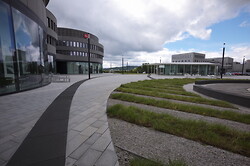
The next morning (Tuesday) and after a good breakfast, we assembled at the Leica Customer Care Department Picture 1 to hand in any of our kit that needed the attentions of Leica’s skilled operatives and to collect our loan equipment that I had requested on behalf of the group.
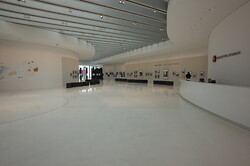
My M11-P was having its bespoke leather covering replaced as the original was not up to Leica’s standards and having the camera serviced at the same time. All our service requirements and loan requests were sorted out. I had asked for an M EV1 and the newly announced 35mm f1.2 Noctilux. This latter was unavailable due to the requirements of the London Show but the M EV1 was on hand as was the majority of the Fellowship’s other requests. More on the M EV1 later.
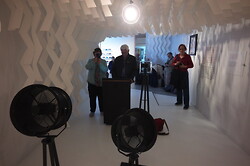
The rest of the morning and some of the afternoon was taken up with guided tours of Leica Welt, an interactive exhibition of Leica’s heritage and history most of which we participated in and thoroughly enjoyed. Pictures 2,3
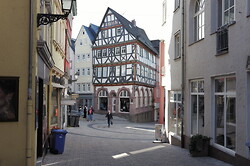
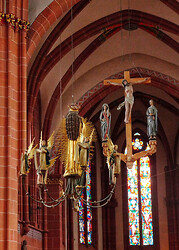
Lunch for some in the Leitz Café followed while the rest wandered off to explore the city of Wetzlar, including some famous Leica parts i.e. where Oskar Barnack took THAT picture of the Eisenmarkt, the cathedral and other Leica related sites. Pictures 4,6
I stayed on site to finalise various arrangements. I ran into Mark Shipard, Leica’s Head of Design and we had an interesting chat over a cup of coffee in the Leitz Café. Picture 5
We reassembled at the Leica Academie later that afternoon and met Lars Netopil with whom I had arranged to talk to us. Lars as usual, was absolutely fascinating and told us about a number of unique items both in the Leica Museum and also in Leica’s Archive. These included a number of prototype cameras that never reached production and some really interesting accessories of which some went into production and others which didn’t although they might have formed the basis of other similar items that were produced in series. Lars’ talk was lavishly illustrated with some superb photographs extracted from his definitive 2 volume magnum opus about the Leica Museum.
We entertained Lars to dinner at Oskars, the restaurant in the Ernst Leitz Hotel on the Leica Campus to thank him for his time and the effort he put in to his lecture.
On the Wednesday and again, after another good breakfast, we arrived at the Leica Academie for a talk by Stefan Daniel, now Global Senior Brand Representative at Leica Camera making him effectively the 3rd in line in the Company. He is now also known as ‘Mr. M’. We were most grateful to him for sparing us some time as he was in a hurry to travel to London for the Photographic Show.
Stefan took us back a few years to describe the circumstances that led to the planning and launch of the M Typ 240 for which he had been the project manager. He told us about the endless discussions about what and what not to include in what was the most radical departure from the original M3 of 1954. There were so many things that were new to M Series cameras – a CMOS sensor with associated Live-View, which made it the first 35mm camera to allow the use of 3 separate viewfinders (with a Visoflex EVF), video recording capabilities and, of course more controversially, the deletion of the sequential M number (should have been an M10).
Regardless of all the nay-sayers, particularly in view of the body’s increased size, the M Typ 240 was a resounding success and laid the groundwork for future M models to come.
Following Stefan, we were treated to a talk by a real legend – Peter Karbe, now semi-retired (not ‘semi’ enough, his wife says!).
Peter provided us with a highly scientific lecture the subject of which was Apochromatic (APO) lenses. He explained their benefits for the photographers in terms of colour reproduction and lack of edge distortion and variability in the pictures that they produced. His talk demanded the qualifications of a graduate in both Physics and Optical Engineering but was fascinating for all that. It was good to learn, however, that the level of technical incorporation into our expensive bits of glass was the cause of them being the prices Leica charges, and that was most reassuring.
The afternoon was our own and we all met again later to return the kit we had borrowed and to collect the repaired items we had left on the day before. All this work had been completed to our immense satisfaction and without a penny (Euro!) being charged. Leica are very good and generous to us, undertaking all this on our behalf and we owe them a serious vote of thanks for what they do. The dinner in the Blankenfeld Hotel was again excellent, proving again to be a most suitable alternative to the Ernst Leitz hotel on site.
An interesting aside – I have since ascertained the Leica have now bought back the Ernst Leitz hotel so that it is now run in-house. This would appear to have several benefits. The first is that with the close connection to the Company, we will hopefully avoid a number of the problems we have suffered in the past couple of years with reservations and in the restaurant. The second is that they might offer discounts to groups such as ours, when visiting the factory, though that has yet to be tested.
Thursday was the day when Ascension Day was celebrated in Germany as a Bank Holiday and although all the visitor amenities were open, the factory itself was closed.
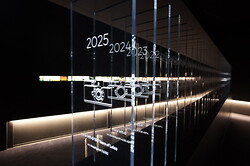
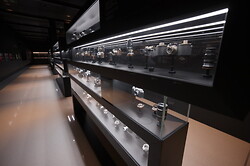
Fortunately we met Erik Vogler who had escorted us through the Leica Welt exhibit on the Tuesday who had come in on his day off. He showed us parts of the Historic Leica display and some other areas that were off-limits to the public. We saw a wonderful display of an example of every camera, lens, binocular and other things and we marvelled at some of the kit that had achieved cult status in the collecting world, Picture 7.
Erik explained the most interesting background and history of the manufacturing problems and challenges that some of the items presented. The 50mm Noctilux f1.2 which was the first production lens to incorporate aspheric elements, was so complicated and exacting to build that some 50% of production had to be binned as they didn’t meet Leica’s exacting standards – they never made a profit on the sale of any of those lenses and it was no surprise that it was replaced by the 50mm f1.0 Noctilux a few years later. This was a Canadian design by Walter Mandler and was much less complicated with no aspheric elements.
We were very grateful to Erik for his time and his insights into the Leica kit he showed us and the time passed very quickly. When we had finished some of us went back down into the city to revisit some of the attractions, others stayed on the site to pass the afternoon before returning to the hotel for a last night dinner.
On one of the days it was Tony’s birthday, so the whole group signed a birthday card that I bought in the Leica Museum that unfolded to show a 3D image of the factory that we felt was appropriate, and we presented it to him on this last evening.
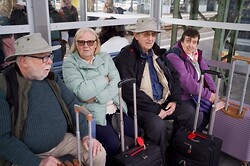
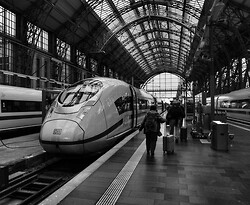
The following morning we were all packed and breakfasted and outside waiting for the taxis to take those of us travelling by train to the railway station for the trip home, Picture 8 which was uneventful in my case. Picture 9
This had been a good expedition. We saw and learnt much about the Company and some of its background but above all we appreciated the way that Leica treats members of the Fellowship with all the events and lectures that are arranged for us and the way that the Customer Services folk look after us so well and generously. As Stefan put it ”you are our ambassadors in the real world. You have your ears to the ground and by keeping in touch with us in a regular way, we can feed your comments back to the Company”. Long may it last.
I said earlier that I had borrowed a Leica M-EV1 for the couple of days whilst we were in Wetzlar. I was particularly interested in how it would cope with my 16-18-21 Tri-Elmar as I always need to attach my Visoflex to my M11-P to use it properly. The M-EV1 worked perfectly satisfactorily but I was not so impressed with in general photographic duties. I felt rather disassociated from the pictures I was taking as there was no opportunity to see ’around’ the subject as you can do with a ‘normal’ digital M. So, no thanks, I won’t be buying one. But just to shoot myself totally in the foot, I have just bought a Q3 43 on the recommendation of a number of Fellowship members – and it’s just wonderful! I have kept my M11-P, the Visoflex and the 16-18-21 Tri-Elmar as I found that the M-EV1 offered no advantage over this combination. In fact, THE picture of the Eisenmarkt was taken with the Q3 43on 43mm as a sop to Oskar Barnack whose UR-Leica was fitted with a 42mm lens!
To close I would like to thank all my fellow travellers – we all get on so well and that makes my task as leader so much easier. Organising these trips is quite hard work having to liaise with so many people at the factory to ensure everything runs relatively smoothly, but it is a job I love and enjoy and, following certain requests, I am proposing a Fellowship trip to Paris probably in May 2028 and I am undertaking some limited research towards this at the moment. Those of you that are interested, please get in touch and there will further details in future months.
After some initial mix up on dates, all went ahead with the trip as planned – well nearly! We usually stay at the Ernst Leitz Hotel on the Leica campus, it’s not cheap but it has considerable style with first class rooms and great food. Unfortunately, on this occasion they could not offer us accommodation on one of our chosen nights and so I decided that an alternative should be found. I consulted several of my friends at Leica who told me about the Hotel Blankenfeld, just about 10 minutes’ walk from the factory, much cheaper and with excellent food and comfortable accommodation, so we settled on that.
The first night we had to eat at the hotel owner’s brother’s restaurant as the menu was identical to the hotel and indeed the food was good. I was much later than the others due to missed train connection at Siegen but I got there in the end.
The next morning (Tuesday) and after a good breakfast, we assembled at the Leica Customer Care Department Picture 1 to hand in any of our kit that needed the attentions of Leica’s skilled operatives and to collect our loan equipment that I had requested on behalf of the group.
My M11-P was having its bespoke leather covering replaced as the original was not up to Leica’s standards and having the camera serviced at the same time. All our service requirements and loan requests were sorted out. I had asked for an M EV1 and the newly announced 35mm f1.2 Noctilux. This latter was unavailable due to the requirements of the London Show but the M EV1 was on hand as was the majority of the Fellowship’s other requests. More on the M EV1 later.
The rest of the morning and some of the afternoon was taken up with guided tours of Leica Welt, an interactive exhibition of Leica’s heritage and history most of which we participated in and thoroughly enjoyed. Pictures 2,3
Lunch for some in the Leitz Café followed while the rest wandered off to explore the city of Wetzlar, including some famous Leica parts i.e. where Oskar Barnack took THAT picture of the Eisenmarkt, the cathedral and other Leica related sites. Pictures 4,6
I stayed on site to finalise various arrangements. I ran into Mark Shipard, Leica’s Head of Design and we had an interesting chat over a cup of coffee in the Leitz Café. Picture 5
We reassembled at the Leica Academie later that afternoon and met Lars Netopil with whom I had arranged to talk to us. Lars as usual, was absolutely fascinating and told us about a number of unique items both in the Leica Museum and also in Leica’s Archive. These included a number of prototype cameras that never reached production and some really interesting accessories of which some went into production and others which didn’t although they might have formed the basis of other similar items that were produced in series. Lars’ talk was lavishly illustrated with some superb photographs extracted from his definitive 2 volume magnum opus about the Leica Museum.
We entertained Lars to dinner at Oskars, the restaurant in the Ernst Leitz Hotel on the Leica Campus to thank him for his time and the effort he put in to his lecture.
On the Wednesday and again, after another good breakfast, we arrived at the Leica Academie for a talk by Stefan Daniel, now Global Senior Brand Representative at Leica Camera making him effectively the 3rd in line in the Company. He is now also known as ‘Mr. M’. We were most grateful to him for sparing us some time as he was in a hurry to travel to London for the Photographic Show.
Stefan took us back a few years to describe the circumstances that led to the planning and launch of the M Typ 240 for which he had been the project manager. He told us about the endless discussions about what and what not to include in what was the most radical departure from the original M3 of 1954. There were so many things that were new to M Series cameras – a CMOS sensor with associated Live-View, which made it the first 35mm camera to allow the use of 3 separate viewfinders (with a Visoflex EVF), video recording capabilities and, of course more controversially, the deletion of the sequential M number (should have been an M10).
Regardless of all the nay-sayers, particularly in view of the body’s increased size, the M Typ 240 was a resounding success and laid the groundwork for future M models to come.
Following Stefan, we were treated to a talk by a real legend – Peter Karbe, now semi-retired (not ‘semi’ enough, his wife says!).
Peter provided us with a highly scientific lecture the subject of which was Apochromatic (APO) lenses. He explained their benefits for the photographers in terms of colour reproduction and lack of edge distortion and variability in the pictures that they produced. His talk demanded the qualifications of a graduate in both Physics and Optical Engineering but was fascinating for all that. It was good to learn, however, that the level of technical incorporation into our expensive bits of glass was the cause of them being the prices Leica charges, and that was most reassuring.
The afternoon was our own and we all met again later to return the kit we had borrowed and to collect the repaired items we had left on the day before. All this work had been completed to our immense satisfaction and without a penny (Euro!) being charged. Leica are very good and generous to us, undertaking all this on our behalf and we owe them a serious vote of thanks for what they do. The dinner in the Blankenfeld Hotel was again excellent, proving again to be a most suitable alternative to the Ernst Leitz hotel on site.
An interesting aside – I have since ascertained the Leica have now bought back the Ernst Leitz hotel so that it is now run in-house. This would appear to have several benefits. The first is that with the close connection to the Company, we will hopefully avoid a number of the problems we have suffered in the past couple of years with reservations and in the restaurant. The second is that they might offer discounts to groups such as ours, when visiting the factory, though that has yet to be tested.
Thursday was the day when Ascension Day was celebrated in Germany as a Bank Holiday and although all the visitor amenities were open, the factory itself was closed.
Fortunately we met Erik Vogler who had escorted us through the Leica Welt exhibit on the Tuesday who had come in on his day off. He showed us parts of the Historic Leica display and some other areas that were off-limits to the public. We saw a wonderful display of an example of every camera, lens, binocular and other things and we marvelled at some of the kit that had achieved cult status in the collecting world, Picture 7.
Erik explained the most interesting background and history of the manufacturing problems and challenges that some of the items presented. The 50mm Noctilux f1.2 which was the first production lens to incorporate aspheric elements, was so complicated and exacting to build that some 50% of production had to be binned as they didn’t meet Leica’s exacting standards – they never made a profit on the sale of any of those lenses and it was no surprise that it was replaced by the 50mm f1.0 Noctilux a few years later. This was a Canadian design by Walter Mandler and was much less complicated with no aspheric elements.
We were very grateful to Erik for his time and his insights into the Leica kit he showed us and the time passed very quickly. When we had finished some of us went back down into the city to revisit some of the attractions, others stayed on the site to pass the afternoon before returning to the hotel for a last night dinner.
On one of the days it was Tony’s birthday, so the whole group signed a birthday card that I bought in the Leica Museum that unfolded to show a 3D image of the factory that we felt was appropriate, and we presented it to him on this last evening.
The following morning we were all packed and breakfasted and outside waiting for the taxis to take those of us travelling by train to the railway station for the trip home, Picture 8 which was uneventful in my case. Picture 9
This had been a good expedition. We saw and learnt much about the Company and some of its background but above all we appreciated the way that Leica treats members of the Fellowship with all the events and lectures that are arranged for us and the way that the Customer Services folk look after us so well and generously. As Stefan put it ”you are our ambassadors in the real world. You have your ears to the ground and by keeping in touch with us in a regular way, we can feed your comments back to the Company”. Long may it last.
I said earlier that I had borrowed a Leica M-EV1 for the couple of days whilst we were in Wetzlar. I was particularly interested in how it would cope with my 16-18-21 Tri-Elmar as I always need to attach my Visoflex to my M11-P to use it properly. The M-EV1 worked perfectly satisfactorily but I was not so impressed with in general photographic duties. I felt rather disassociated from the pictures I was taking as there was no opportunity to see ’around’ the subject as you can do with a ‘normal’ digital M. So, no thanks, I won’t be buying one. But just to shoot myself totally in the foot, I have just bought a Q3 43 on the recommendation of a number of Fellowship members – and it’s just wonderful! I have kept my M11-P, the Visoflex and the 16-18-21 Tri-Elmar as I found that the M-EV1 offered no advantage over this combination. In fact, THE picture of the Eisenmarkt was taken with the Q3 43on 43mm as a sop to Oskar Barnack whose UR-Leica was fitted with a 42mm lens!
To close I would like to thank all my fellow travellers – we all get on so well and that makes my task as leader so much easier. Organising these trips is quite hard work having to liaise with so many people at the factory to ensure everything runs relatively smoothly, but it is a job I love and enjoy and, following certain requests, I am proposing a Fellowship trip to Paris probably in May 2028 and I am undertaking some limited research towards this at the moment. Those of you that are interested, please get in touch and there will further details in future months.